Aid project in Lebanon
Since 2009, I-NFBF has supported its own aid project in Lebanon. The project makes visible how strongly access to care differs according to people’s living conditions.
About
I-NFBF highlights how neurofeedback and biofeedback are used in correctional settings, with refugees, in war zones and in schools with very limited resources. The institute also supports its own Lebanon aid project, active since 2009, and undertakes psychophysiological fieldwork.
Dr Otzen-Wehmeyer is personally involved in these areas. The experience gained through them also informs the training.
Since 2009, I-NFBF has supported its own aid project in Lebanon. The project makes visible how strongly access to care differs according to people’s living conditions.
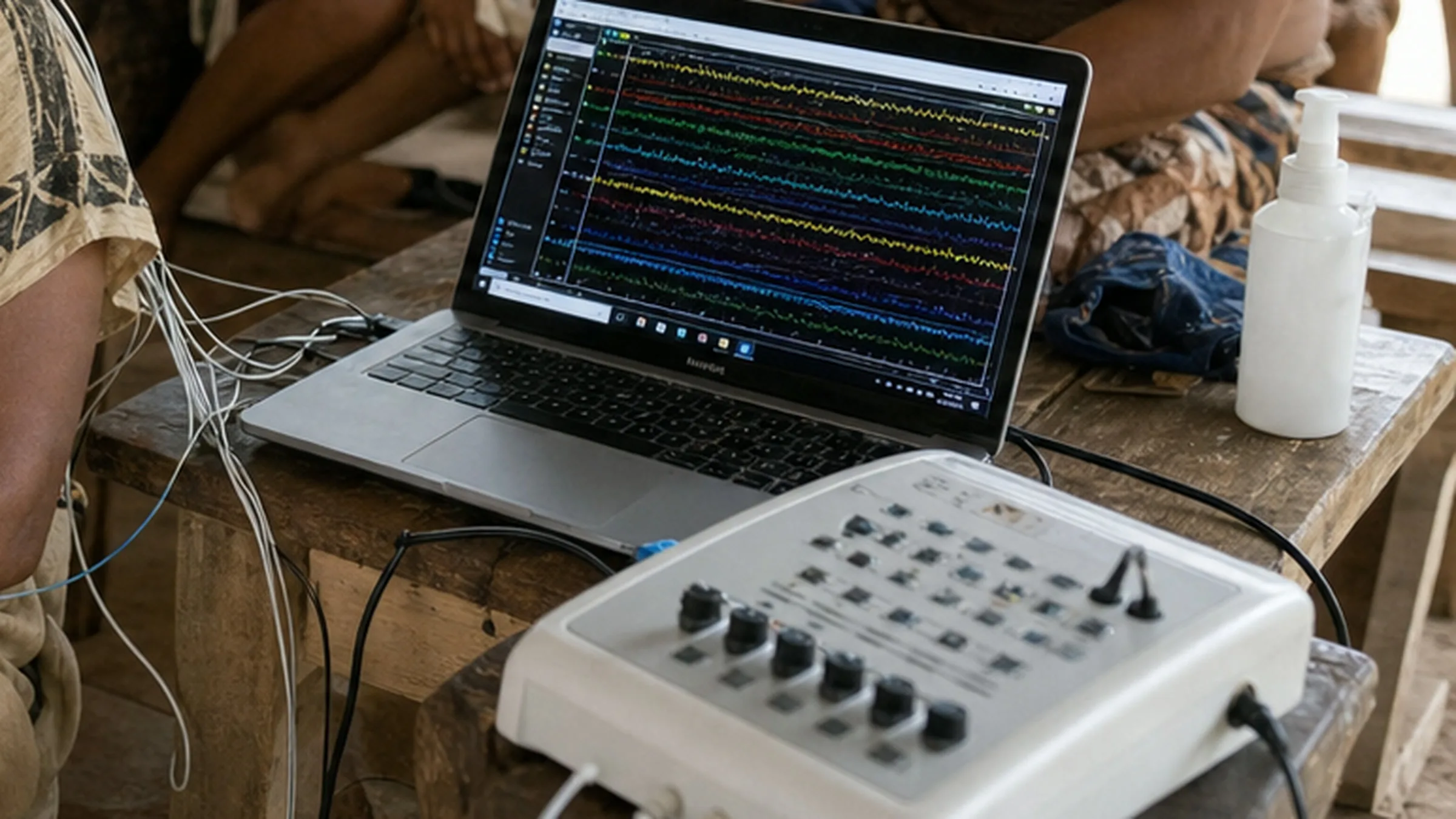
Dr Otzen-Wehmeyer supports trust-based psychophysiological research with members of Indigenous communities. Voluntary qEEG and biofeedback assessments connect measurement practice with cultural context and professional responsibility.
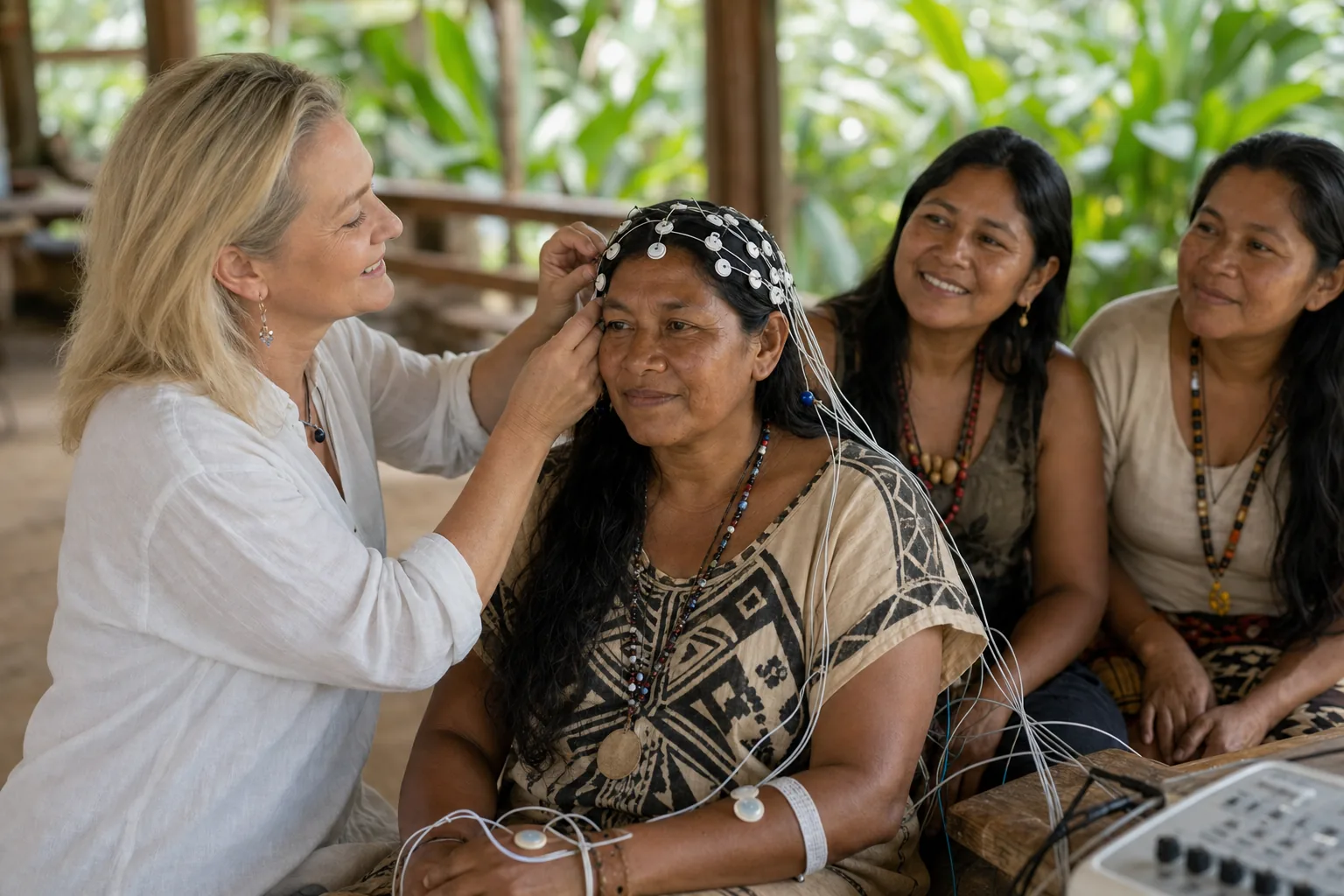
These examples show how neurofeedback is used beyond privileged care settings.
Prisons and forensic settings
Projects in correctional facilities and forensic outpatient services examine how neurofeedback can complement existing treatment programmes.
US correctional facility, 63 incarcerated people with substance-use disorders
After 20 sessions of LORETA neurofeedback at the precuneus using alpha training, clear symptom improvements were documented. After release, 74.6 per cent were not rearrested and 82.5 per cent had no substance-related relapse. The project presents a promising model for relapse and addiction prevention in correctional settings.
Forensic outpatient clinic De Forensische Zorgspecialisten, the Netherlands
A four-week neuromeditation programme combining EEG neurofeedback with cognitive behavioural therapy was completed by eight forensic patients with impulse-control disorders. Its good feasibility and high acceptance provide an important basis for larger efficacy studies.
Refugees and war zones
Programmes for refugees combine neurofeedback with existing psychosocial and clinical services.
Chronic, treatment-resistant PTSD in adult refugees
The 71 participants received a median of 26 neurofeedback sessions over seven months. Despite previous treatment failure, 54 per cent showed clinically significant improvements in PTSD, anxiety and depression, with additional gains in cognitive control measured through event-related potentials.
Refugees in Malmö, Sweden
The study included 21 participants, twelve in the neurofeedback group and nine in the control group. After eight to ten EEG neurofeedback sessions, four of five clinical scales for PTSD, depression, anxiety and wellbeing improved significantly.
New South Wales, Australia
These programmes include neurofeedback for refugee children with TOVA measurement, qEEG and ERP comparison studies, and fMRI studies with survivors of torture. Together they form the most comprehensive neurofeedback programme for refugees worldwide.
Schools, slums and disadvantaged children
School projects explore child-friendly neurofeedback formats where access to individual therapy is limited.
NGO school for vulnerable children in Pokhara, Nepal
A 14-week field study used game-based EEG neurofeedback delivered through a headset and tablet. Self-regulation improved during play, in class, on the playground and in therapy, including among children without computer experience and, in some cases, without literacy.
Neurofeedback integrated into ordinary classroom teaching
Classroom-based neurofeedback significantly improved sustained attention. This was also reflected in observed work behaviour and is particularly relevant for children from socioeconomically disadvantaged families with limited access to therapy.
The format can be adapted to different languages, age groups and care conditions.
Training can be used where there are language barriers or where participants have limited literacy.
Distressing events do not have to be relived or described in detail during training.
Simple games and animations provide an immediate and understandable way to take part.
Clearly defined protocols support consistent clinical quality even in difficult conditions.
I-NFBF documents these projects and uses them as case studies in its training programmes. They sensitise students to global health and social medicine, cultural differences, unequal access to care and the responsibility involved in psychophysiological work.
Read more about the institute, its director and its teaching team on the About page.